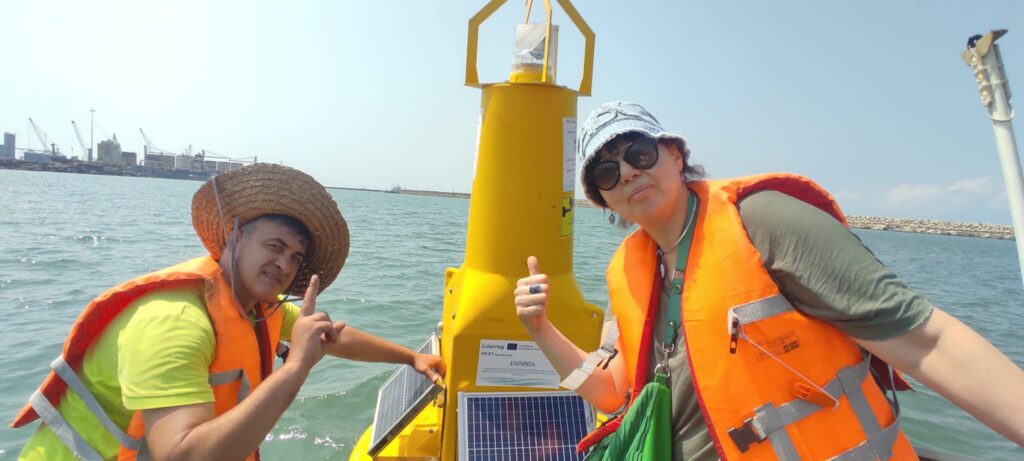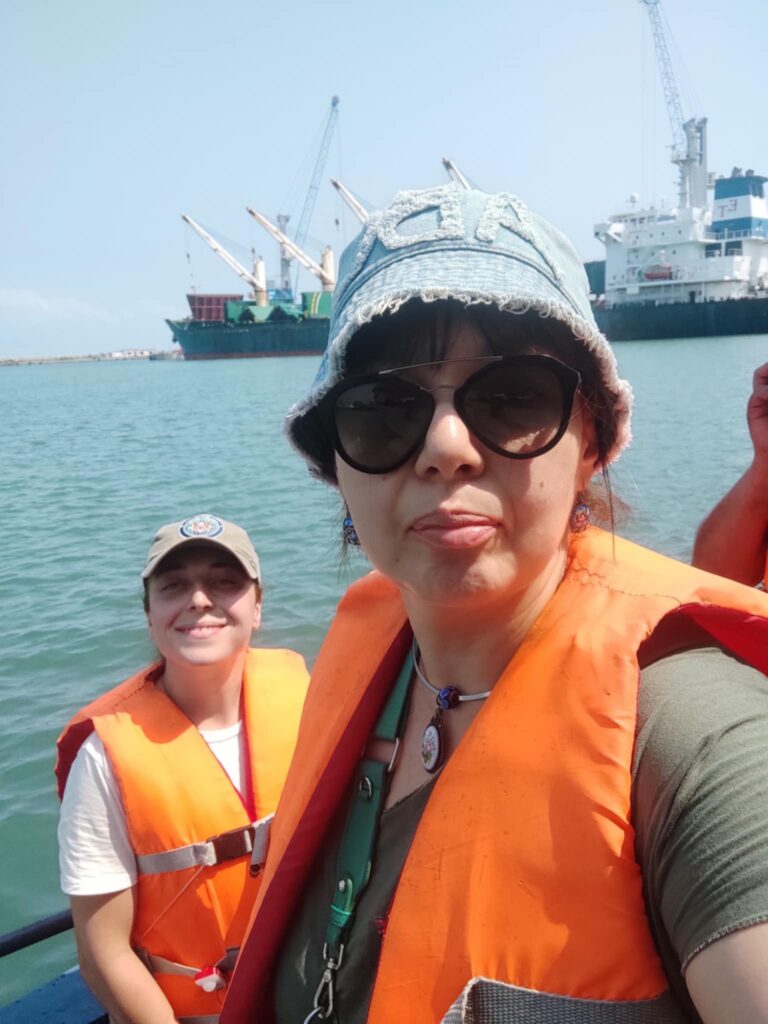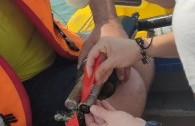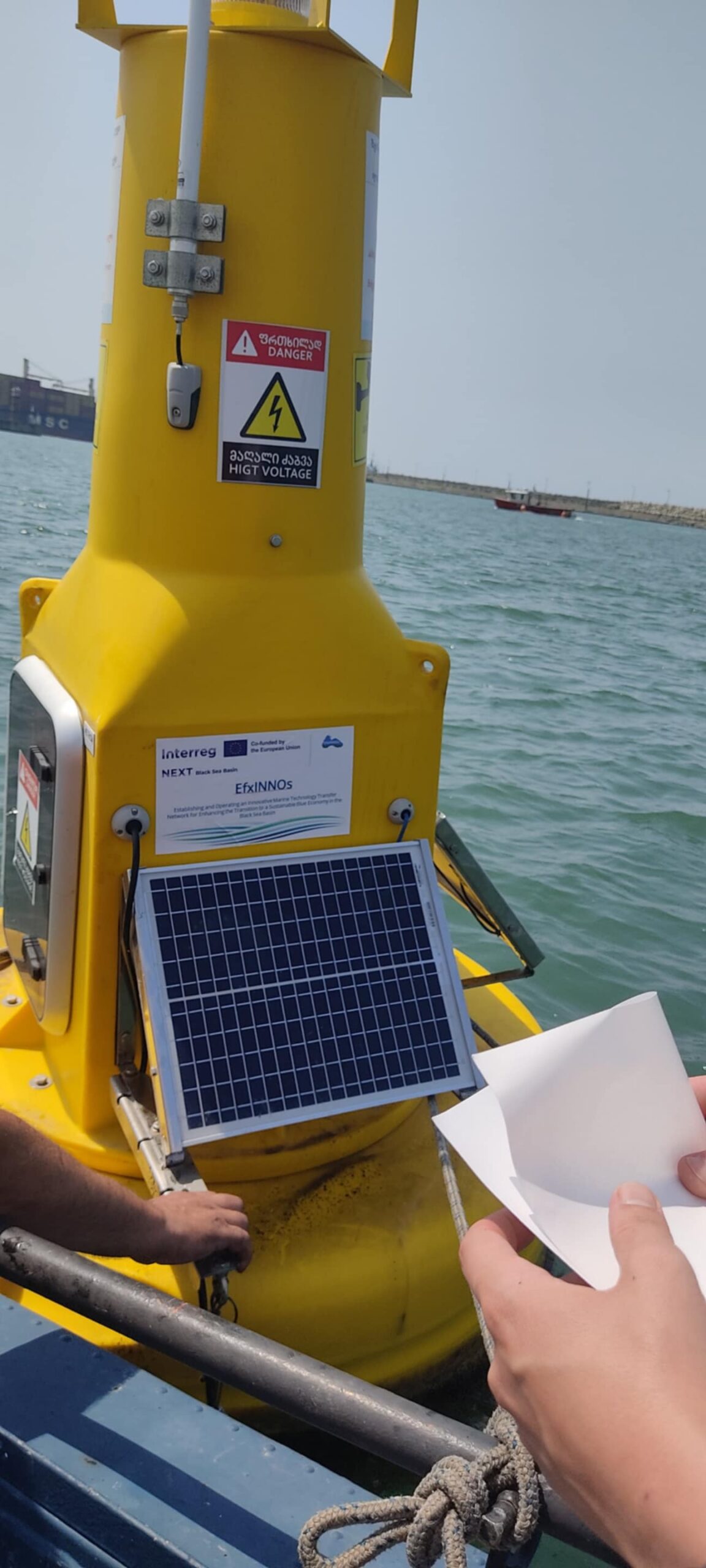
Poti, Georgia – On July 30 of this year, the working group from Ilia State University, participating in the “Establishing and Operating an Innovative Marine Technology Transfer Network for Enhancing the Transition to a Sustainable Blue Economy in the Black Sea Basin (EfxINNOs)” project, conducted fieldwork at a buoy deployed in the sea within the territory of the Port of Poti.
The team consisted of:
The project’s scientific coordinator, Professor Ketevan Kupatadze from the Faculty of Medicine and Natural Sciences; Tamar Edisherashvili, a doctoral student and early-career researcher from the same faculty; Mamuka Modebadze, Head of the Marine Technical Services Unit at Ilia State University; and the project coordinator’s technical assistant, Erdal Demirtas.
The buoy’s sensors measure the following parameters:”
- Water temperature
- Salinity
- Conductivity
- Chlorophyll concentration
- Dissolved oxygen concentration
- Oxygen saturation
The purpose of the field visit was:
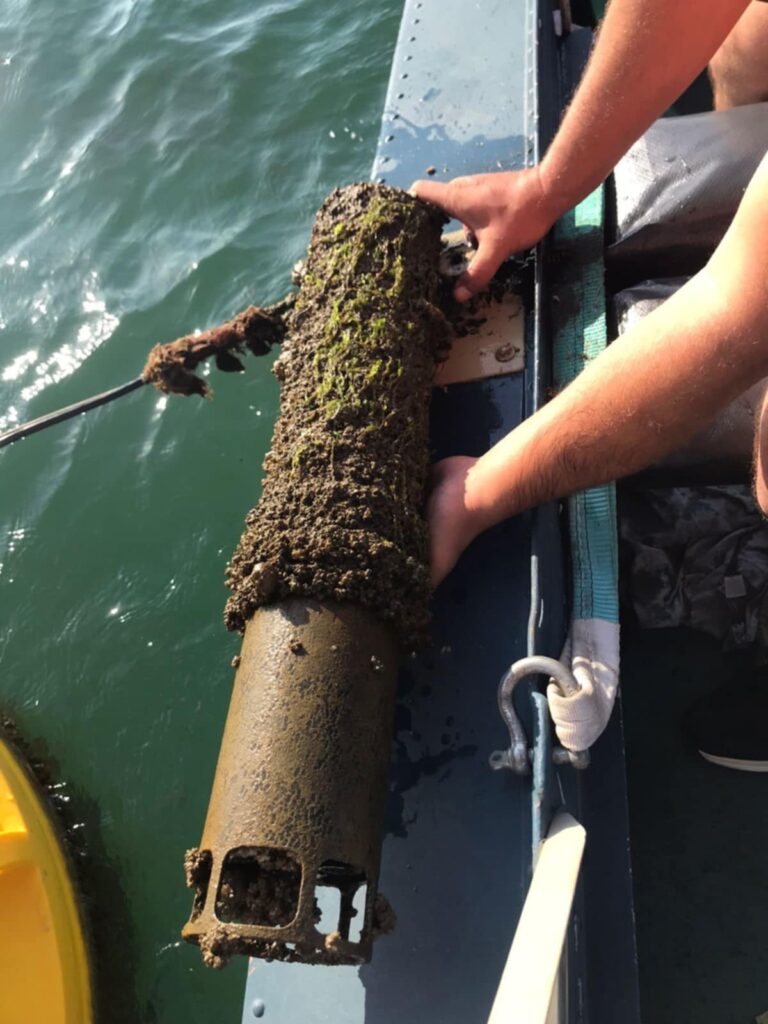
- To clean the Buoy sensors. During summer, when temperatures reach record highs, microorganisms multiply rapidly in the sea and accumulate on the sensors and their protective tubes in the form of colonies. This ultimately results in inaccurate data and can lead to sensor malfunction. Therefore, regular cleaning, especially during periods of high temperatures, is critically important.
- Replacement of the sensor protective tube with a new design. The new tube was sent to us by the company METRICA. It provides enhanced protection for the sensor heads against reflected sunlight and allows the chlorophyll sensor to achieve more accurate measurements.
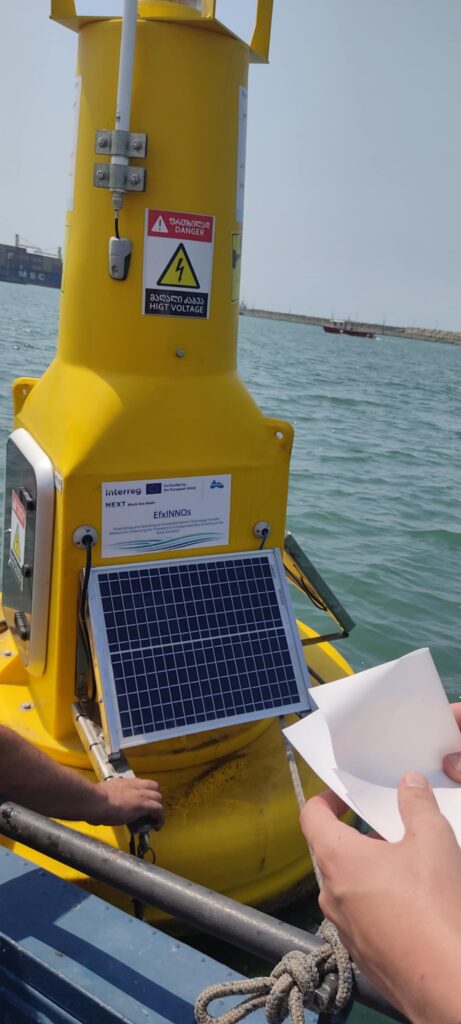
- An Aluminum anode was also installed near the buoy to slow down the ongoing oxidation process as much as possible. This process already occurs slowly since the thick chain at the bottom of the device does not come into contact with the air; however, the use of the anode provides additional protection.
- Alongside the old sticker on the buoy, an updated design sticker produced within the project framework was affixed, fully reflecting the key information about the project. Leaflets were also placed on Ilia State University’s research ship.
- Seawater samples were collected for laboratory analysis and calibration purposes.
- During the work process, a conversation also took place with local children who swim in the area on hot days. The group members explained the purpose and function of the buoy to the children and promised to provide them with more detailed information during a future visit to their schools.
- According to the current assessment, the quality of the seawater is within normal parameters.
The broader aim of the project is to develop and operate a cost-effective, innovative, and sustainable network of marine monitoring platforms. With partners from Bulgaria, Romania, Turkey, and Georgia, the project fosters regional cooperation and contributes to the growth of marine innovation across the Black Sea region.
Funded by Interreg NEXT Black Sea Basin and co-funded by the European Union with a total budget of € 1,643,648.40, the initiative represents an important step forward for Georgia and the entire Black Sea Basin—bridging scientific research, education, and environmental sustainability to support the development of a robust blue economy.
The research activities are ongoing.