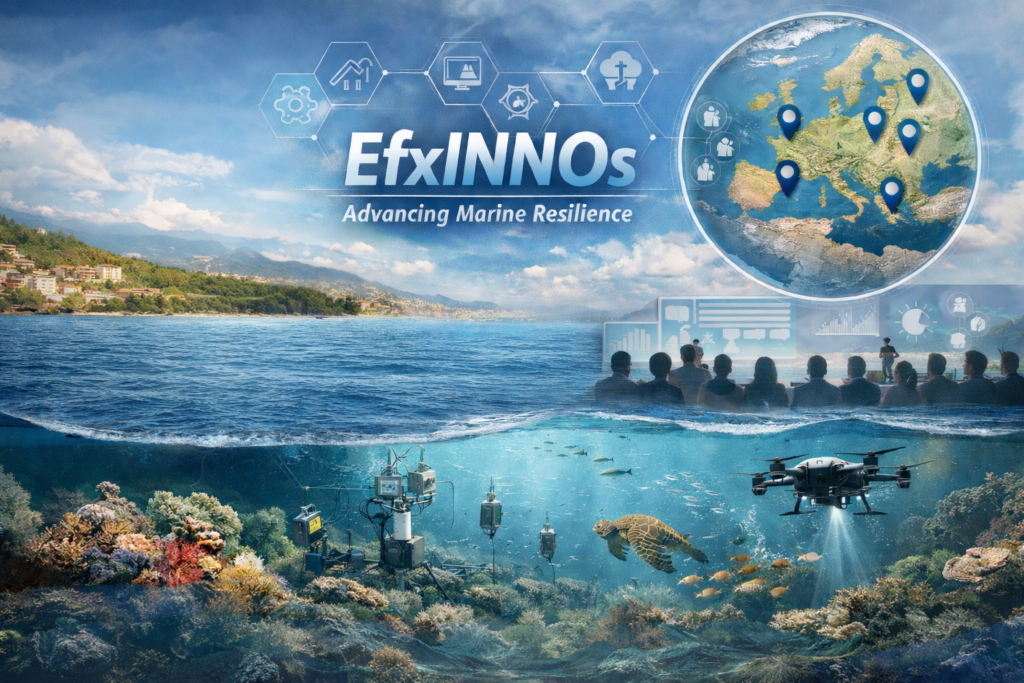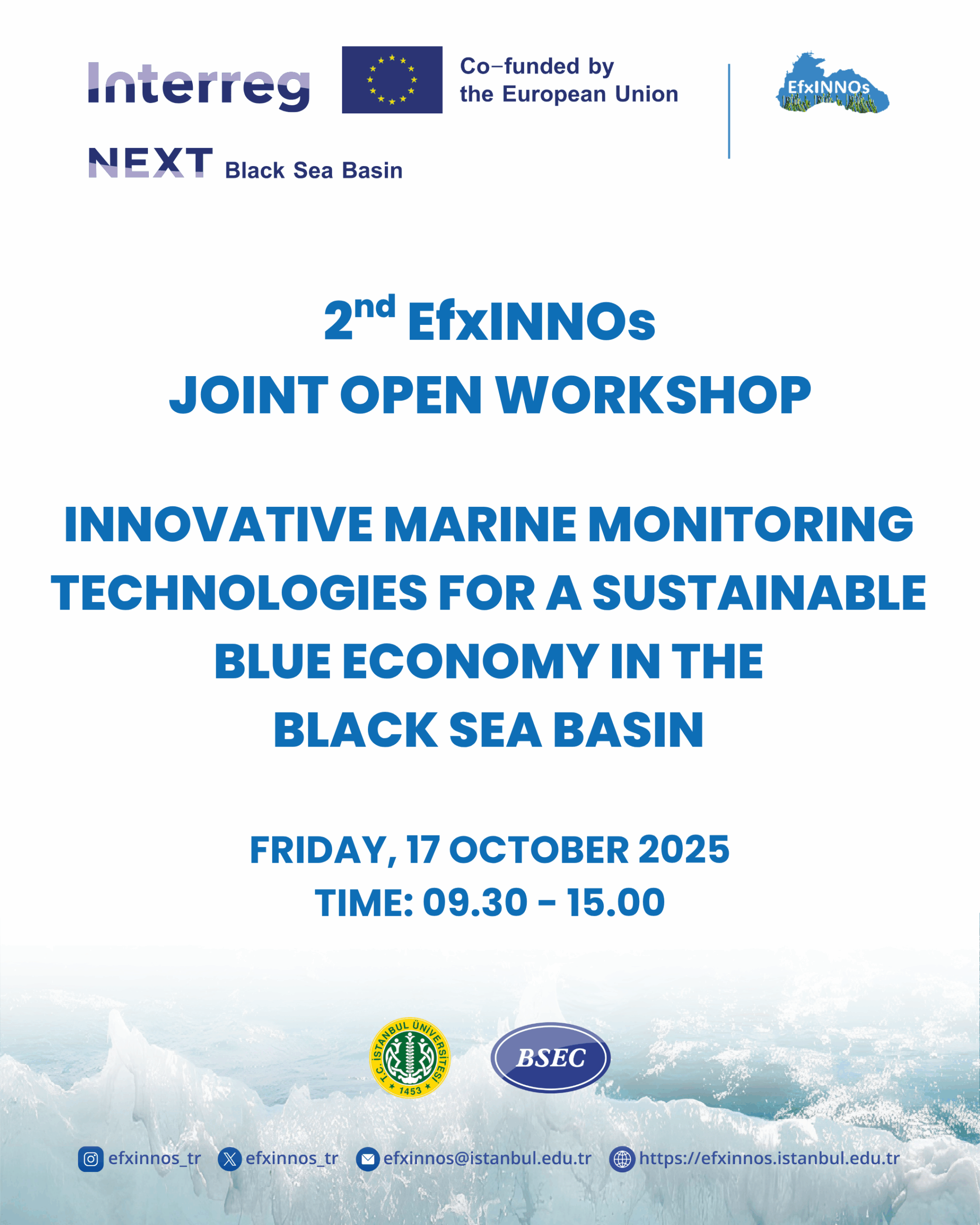
The EfxINNOs project has been selected by the Sustainable Blue Economy Partnership (SBEP) as one of only six projects at the European level invited to participate in its Thematic Annual Programming (TAP) on “Building resilience of coastal and marine socio-ecosystems under multiple pressures to support a sustainable Blue Economy in a changing world”.
This selection recognises the scientific quality, strategic relevance, and impact potential of EfxINNOs within the European innovation landscape. Being shortlisted among a very limited number of projects across the EU underscores the project’s contribution to addressing key challenges related to marine ecosystem resilience and evidence-based policymaking.
Through the development and operation of a cost-effective, technologically advanced network of marine monitoring platforms, EfxINNOs directly supports EU and regional policy frameworks, including the Marine Strategy Framework Directive (MSFD), Marine Spatial Planning (MSP), the EU Biodiversity Strategy, the Climate Change Law, and the Black Sea Integrated Monitoring and Assessment Programme (BSIMAP). Its focus on interoperable data, harmonised workflows, and ML/AI-based analysis of benthic habitats positions the project at the forefront of innovation for resilient marine management.
Participation in the SBEP Thematic Annual Programming offers an additional opportunity to engage with policymakers, funding bodies, researchers, industry, and civil society actors at the EU scale. Moreover, EfxINNOs can showcase its results and identify new pathways for the uptake of its outputs into decision-making processes.
Also, this recognition reinforces the transnational added value of EfxINNOs, bridging the Black Sea Basin and the North Aegean Sea, two regions of high ecological importance that remain under-represented in European marine data infrastructures. By contributing to the objectives of the UN Decade of Ocean Science for Sustainable Development (2021–2030), EfxINNOs demonstrates how targeted innovation and cooperation can deliver tangible societal, environmental, and policy impacts.