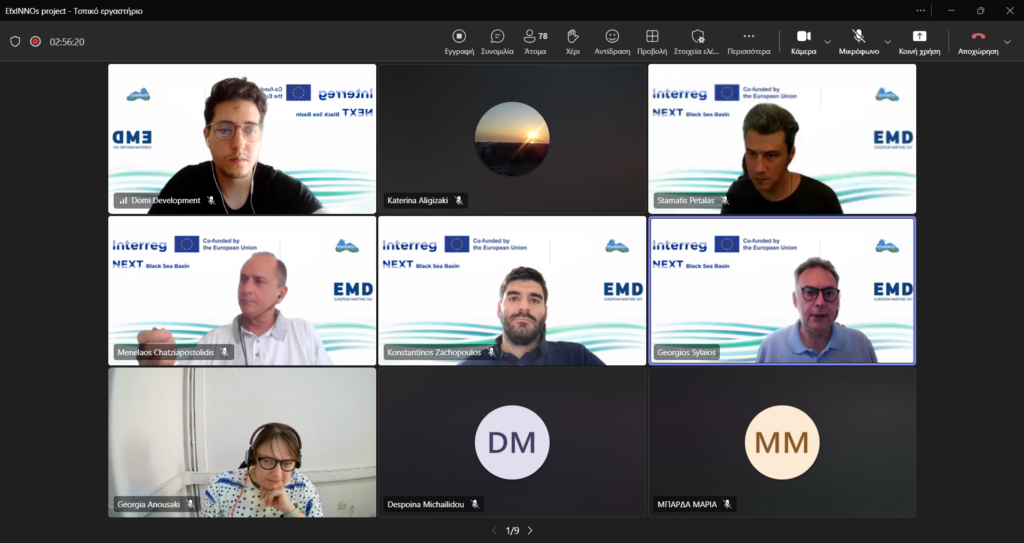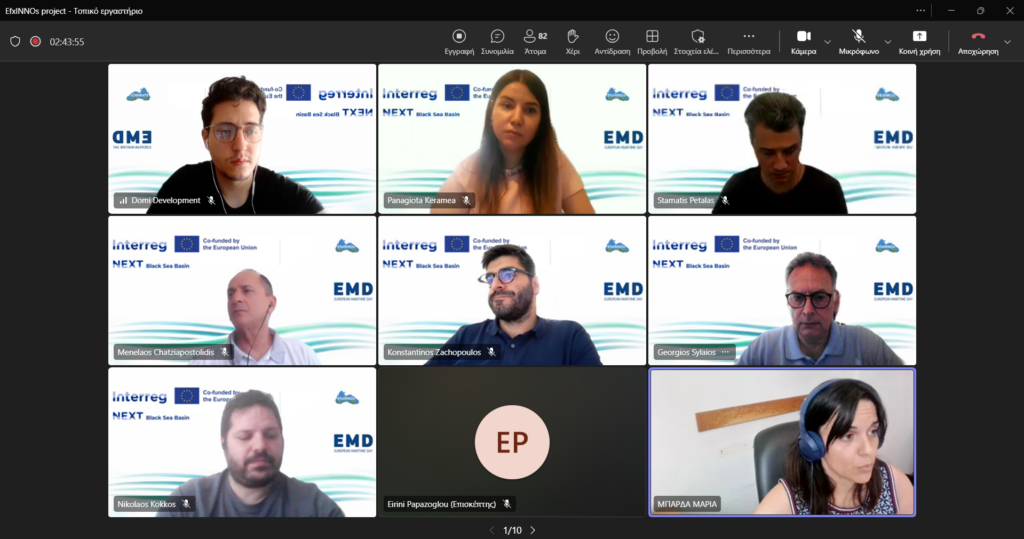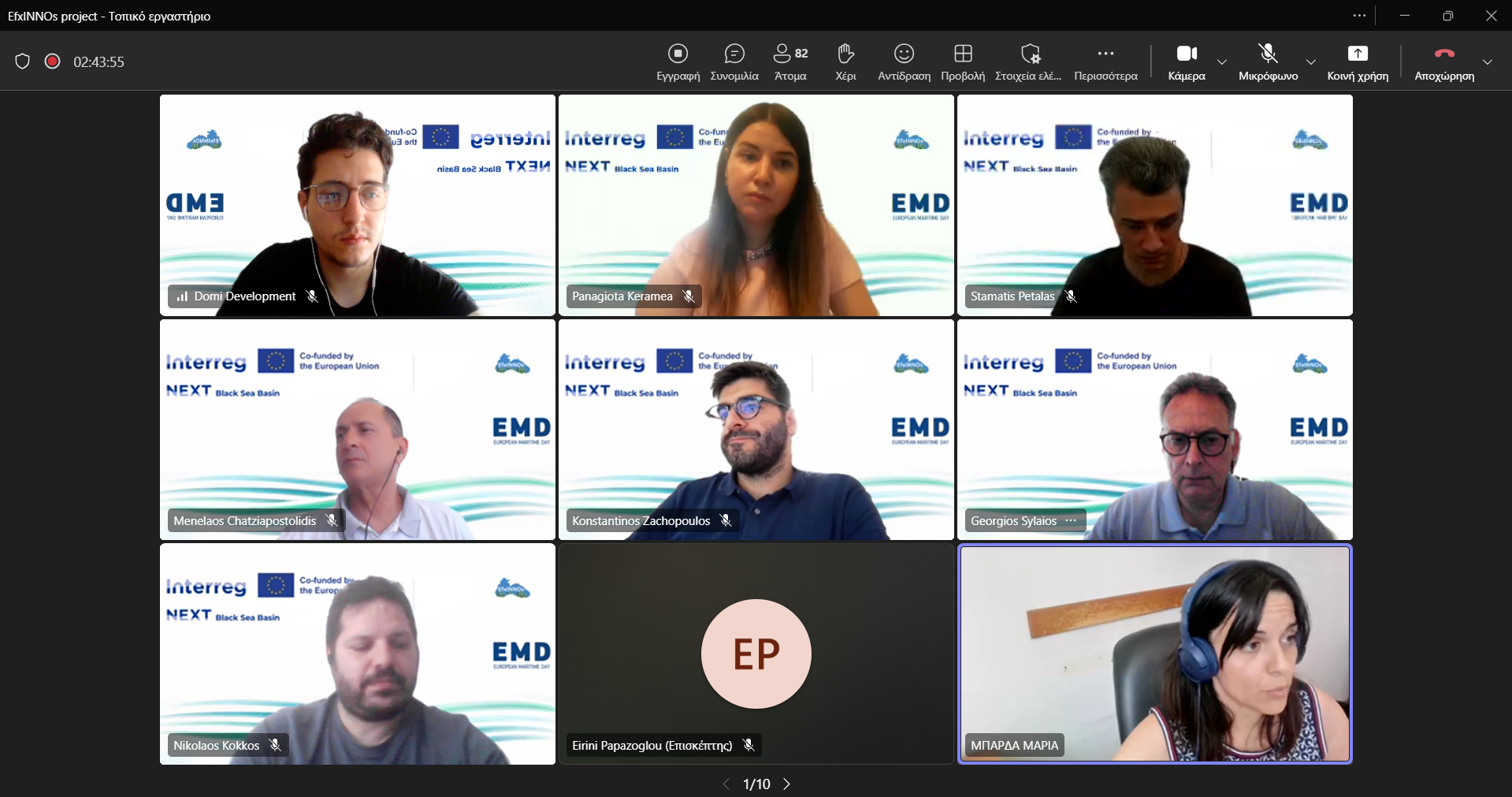
The virtual doors of the Laboratory of Ecological Engineering and Technology at the Democritus University of Thrace (DUTH) opened to an incredible wave of enthusiasm. In celebration of European Maritime Day 2026, DUTH successfully hosted its Online Local Workshop: “Innovative Marine Monitoring Technologies, Climate Change, and Sustainable Blue Growth.”
The workshop took place online on 12 June 2026, 10:30–12:30, and it was a massive success, drawing 140 registrations and welcoming over 100 active participants throughout the sessions. The virtual room was packed with the project’s most vital target group: undergraduate students, PhD candidates, and early-career researchers, alongside public sector officials, environmental consultants, and other stakeholders.
Presentations
Following a brief introduction to the project’s overarching scope, the DUTH team addressed five interconnected core thematic areas:
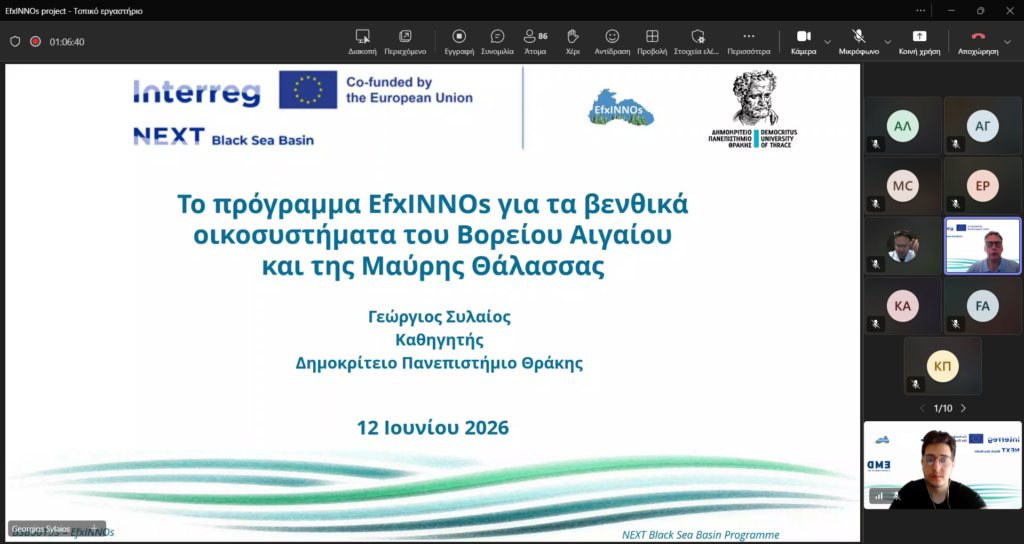
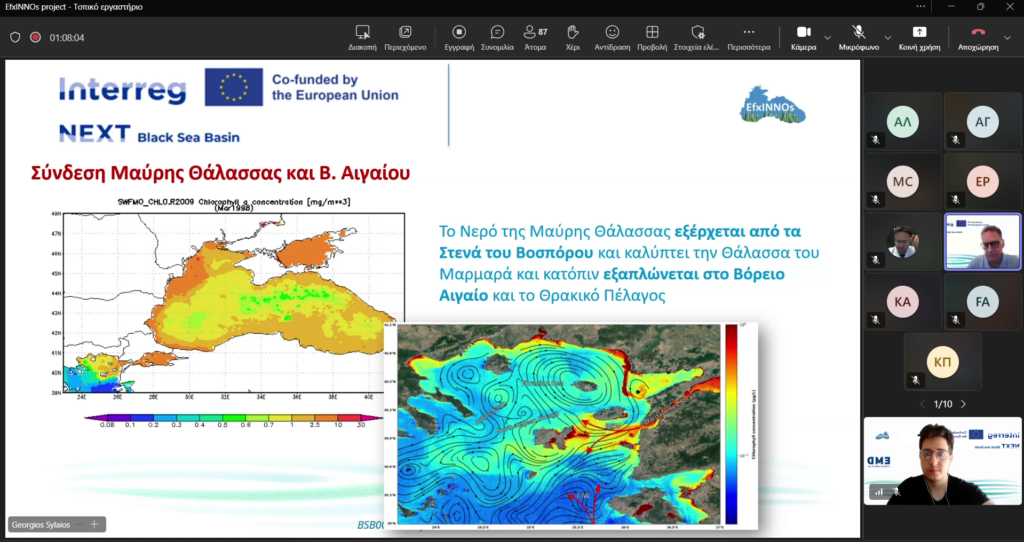
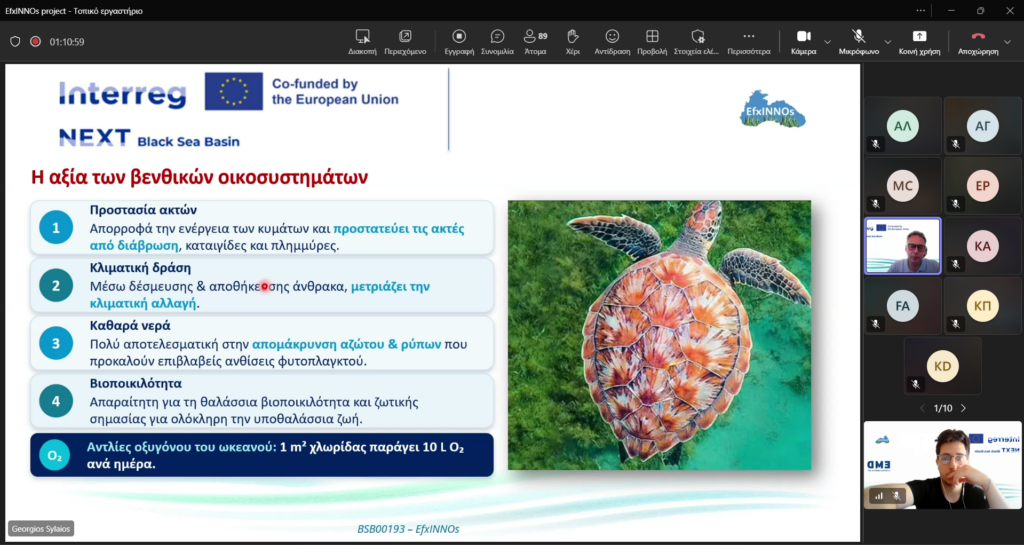
- EfxINNOs program for benthic ecosystems — EfxINNOs Coordinator, Professor Georgios Sylaios described the project focus on benthic habitats in the Northern Aegean and Black Sea and the need for intensive mapping and protection.
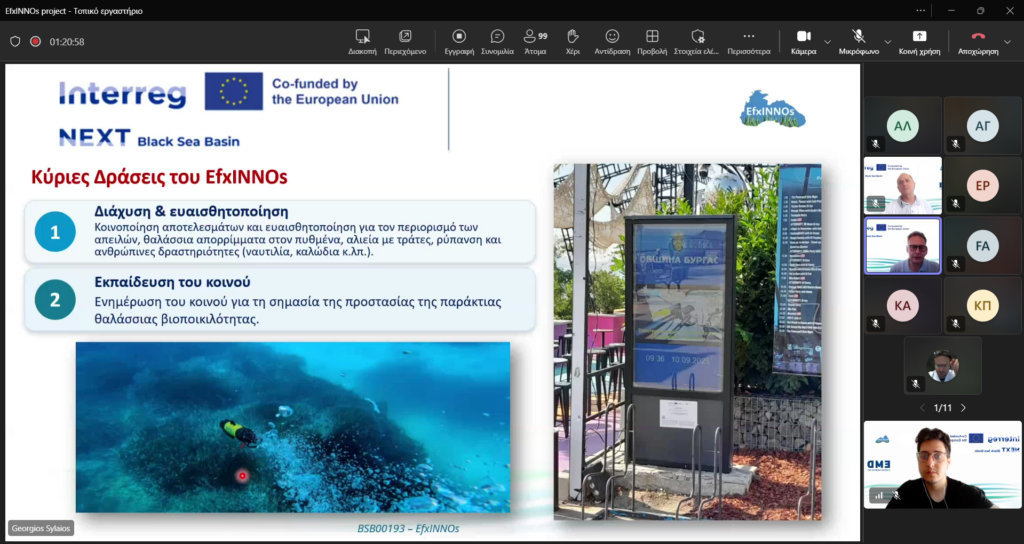
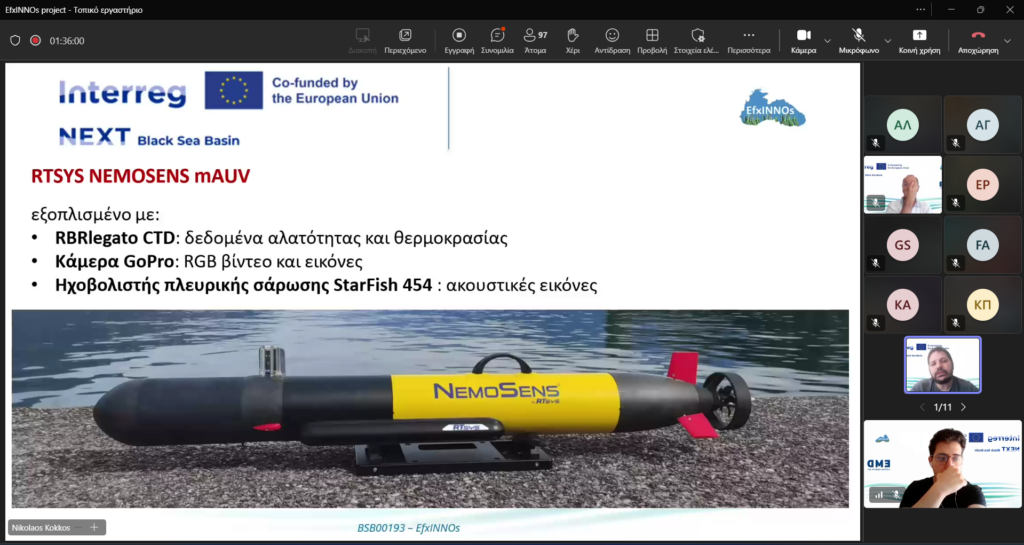
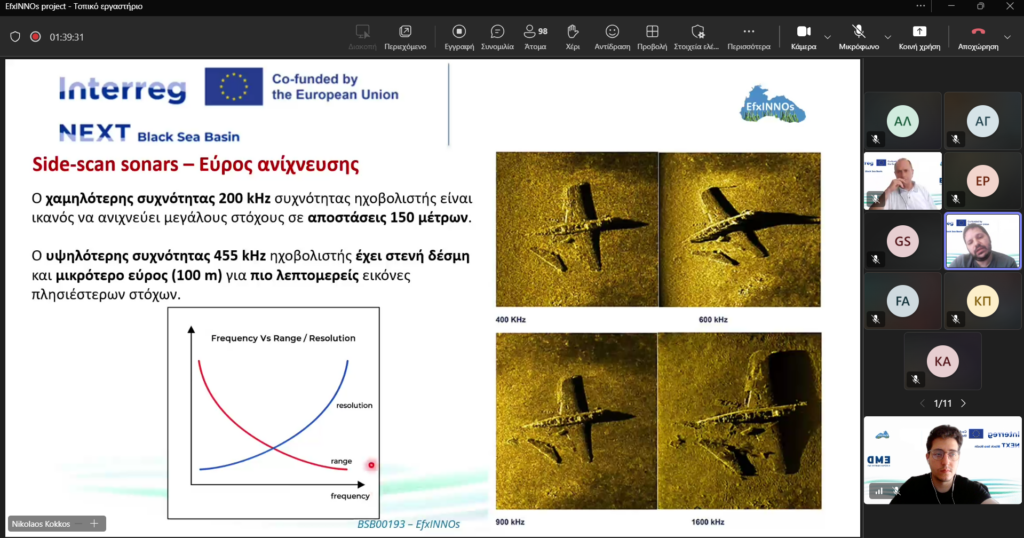
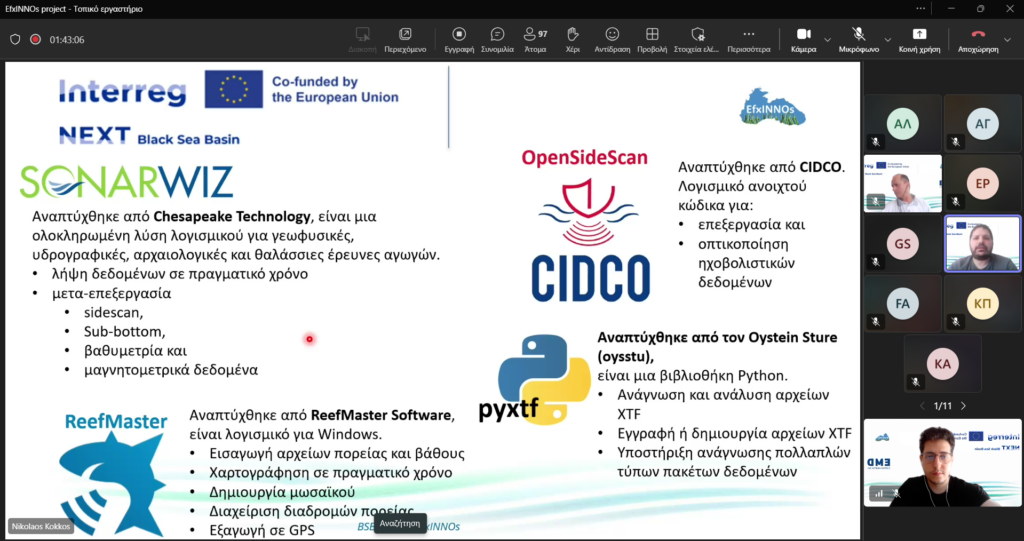
- Micro‑AUV applications — Dr. Nikolaos Kokkos presented the use of micro‑AUVs for mapping benthic habitats and marine litter, including the platform’s technical specs and sensors.
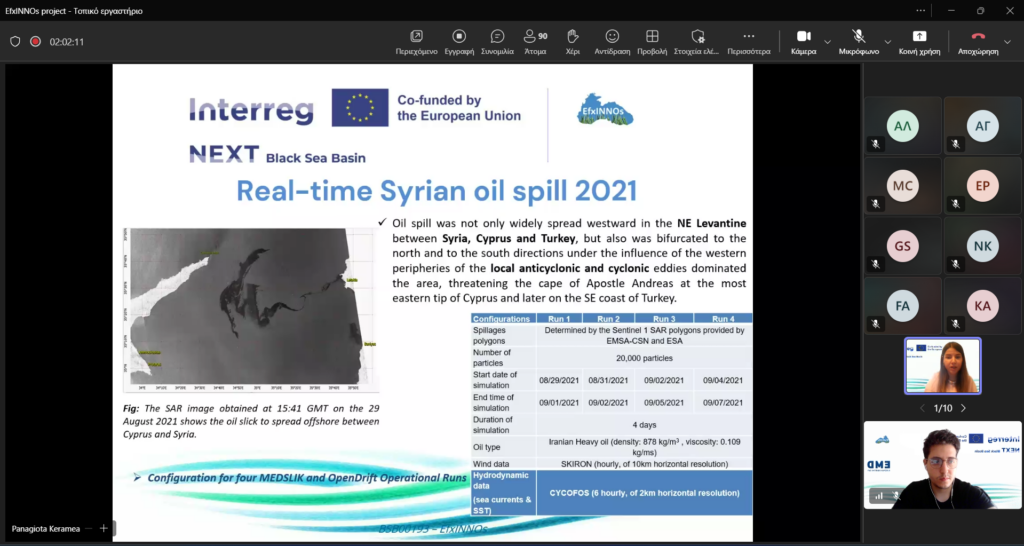
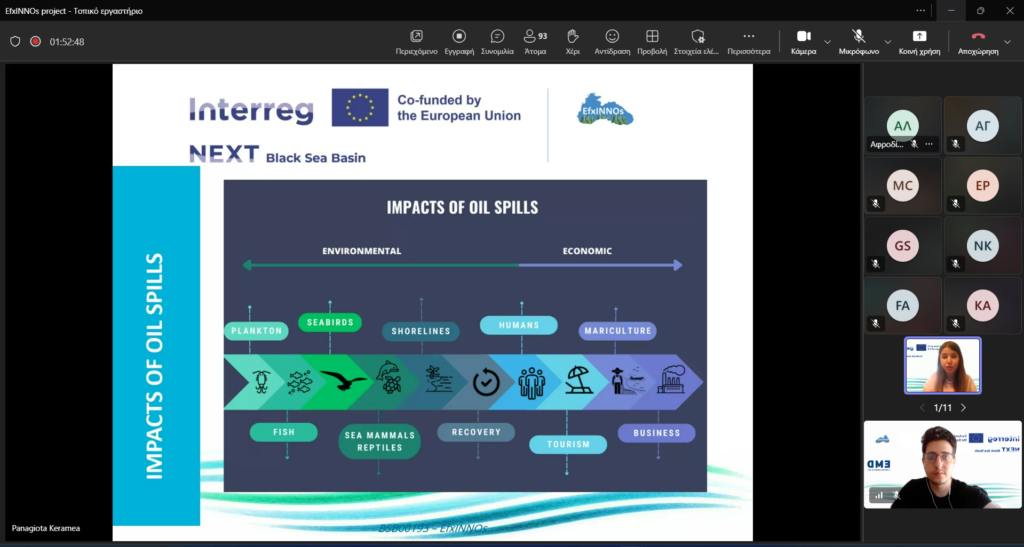
- Oil spill dispersion forecasting — Dr. Panagiota Keramea discussed modeling approaches for predicting oil spill spread and response planning.
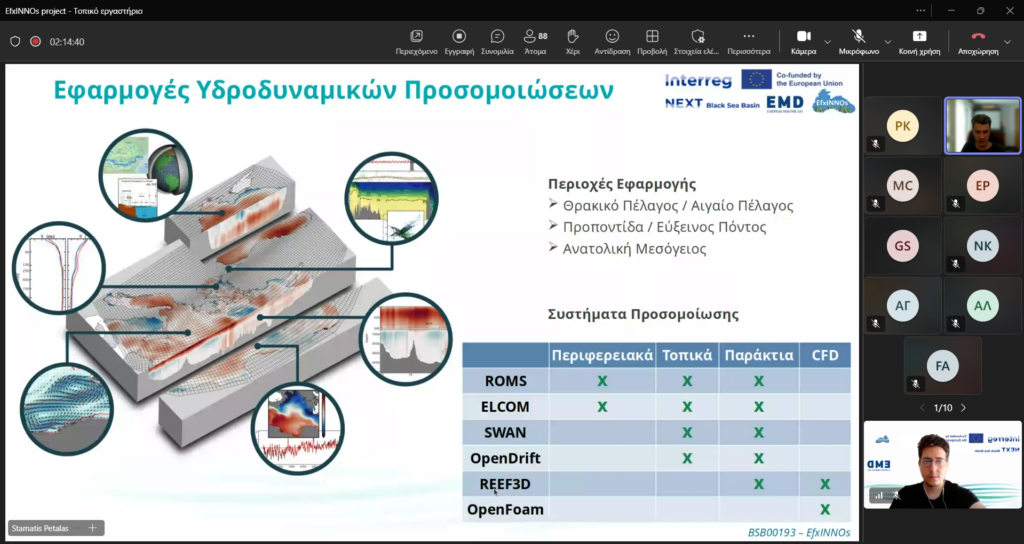
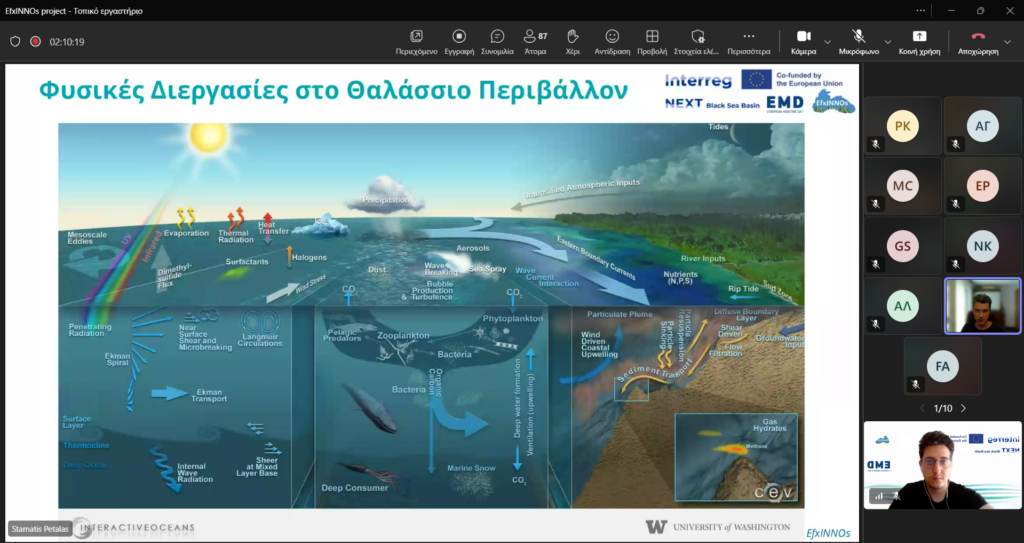
- Numerical simulations of marine processes — Dr. Stamatis Petalas explained how simulations support understanding of physical processes affecting coastal ecosystems.
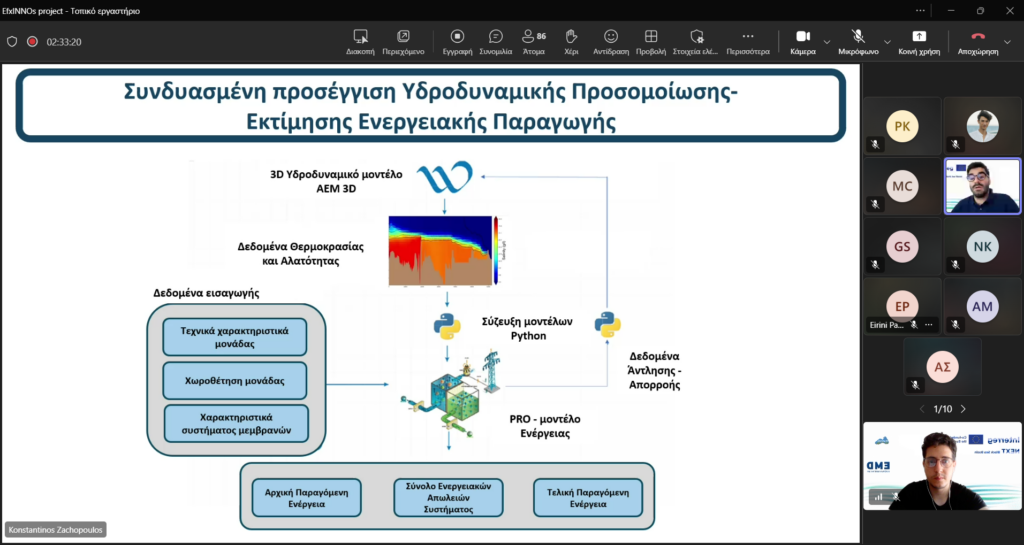
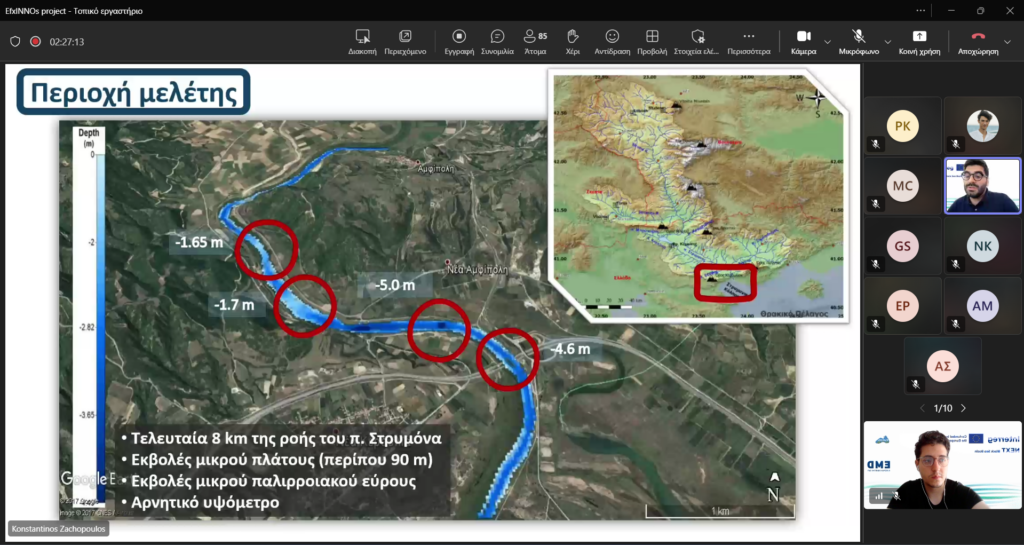
- Renewable energy in estuarine systems — Dr. Konstantinos Zachopoulos presented a case study on energy production in the Strymonas river estuary.
Interactive Q&A Session
A lively Q&A and open discussion engaged participants on monitoring technologies, climate impacts, and prospects opened by blue growth. The session fostered cross‑sector dialogue between academics, public authorities, professionals and young marine scientists.
Impact
The workshop advanced EfxINNOs goals by:
- Demonstrating low‑cost, high‑value monitoring solutions (micro‑AUVs, real‑time sensors, AI tools).
- Sharing new data and imagery that will feed habitat maps and policy tools.
- Strengthening links between scientific outputs and EU environmental frameworks such as MSFD and Black Sea monitoring programs.
Key Takeaways:
- Benthic habitats are vital and vulnerable. Protecting seagrass meadows and other benthic communities is essential for biodiversity, carbon sequestration and coastal protection.
- Innovative monitoring is scalable. micro‑AUV fleets, combined with sensors and acoustic imaging, provide new, affordable ways to map and monitor coastal seabeds.
- Data must inform policy. Translating ecological maps and threat assessments into policy tools and management measures is a central EfxINNOs objective.
Next Steps
EfxINNOs will continue mapping benthic habitats, producing digital habitat maps, collecting novel datasets, and developing policy‑relevant tools. Outputs will be integrated with EU monitoring programs.