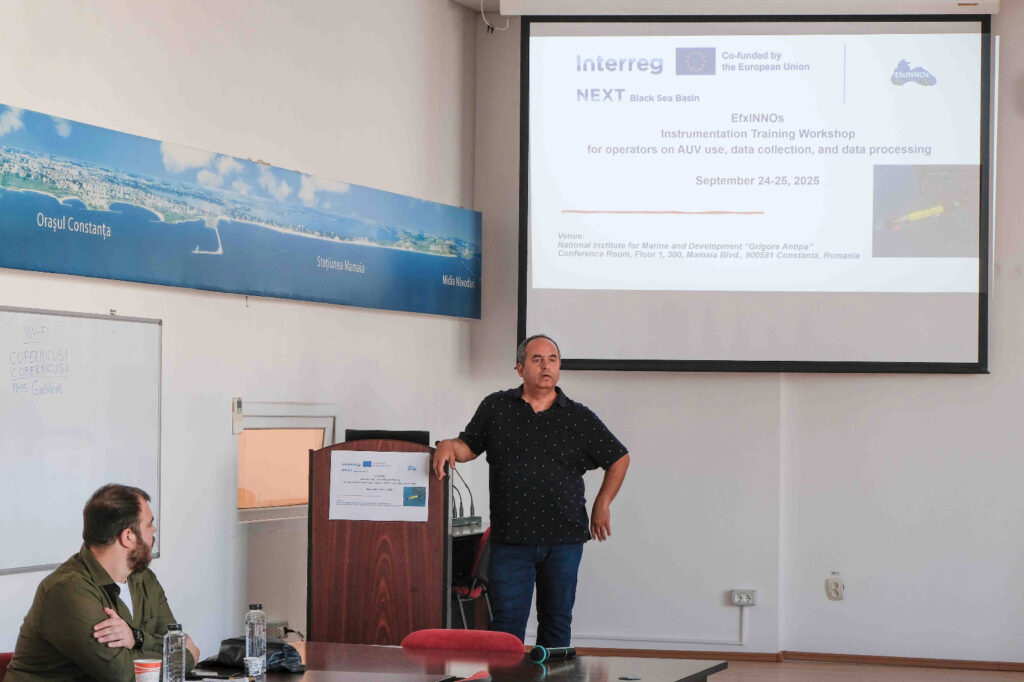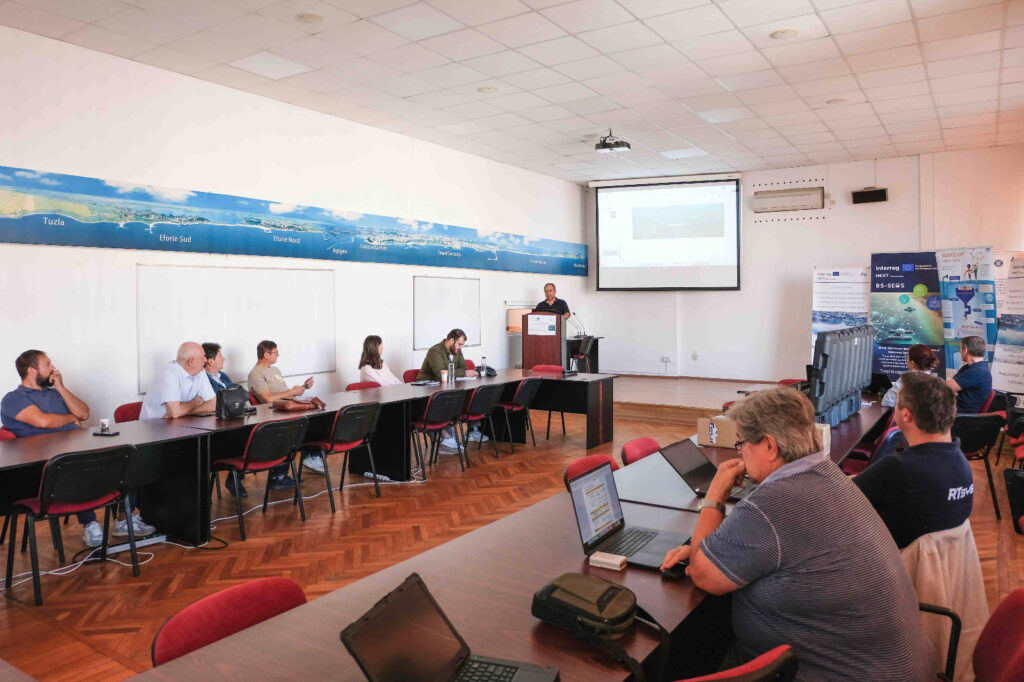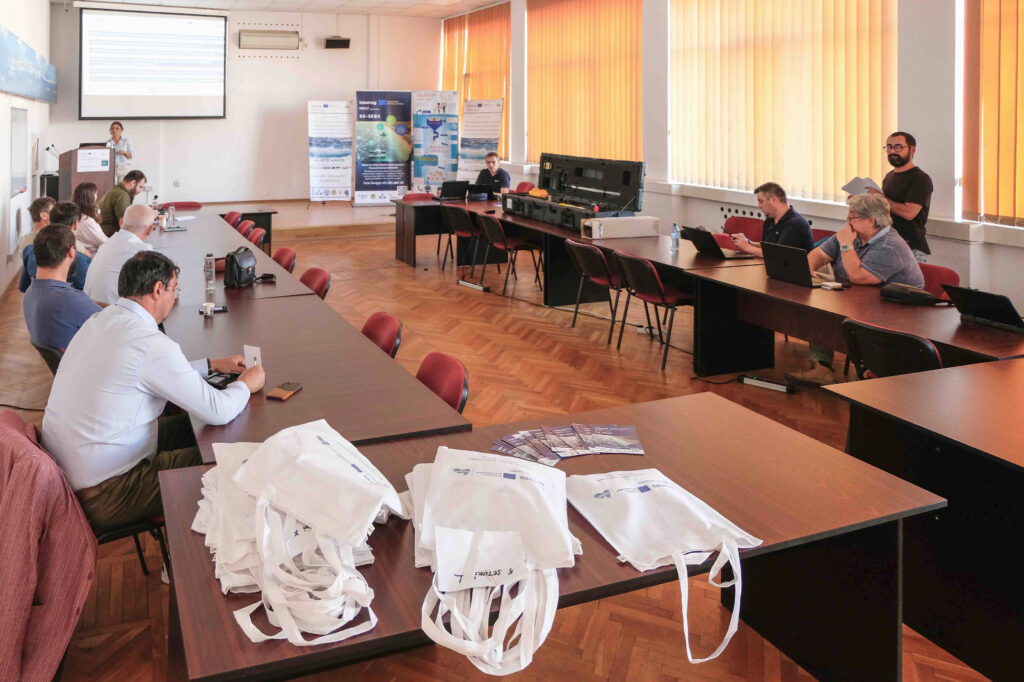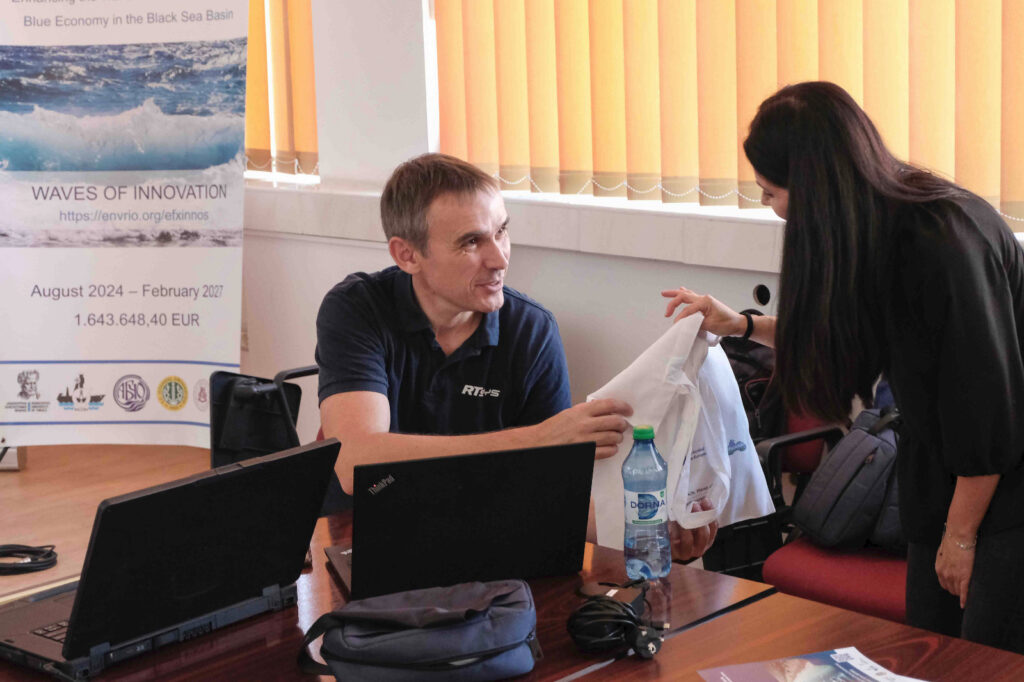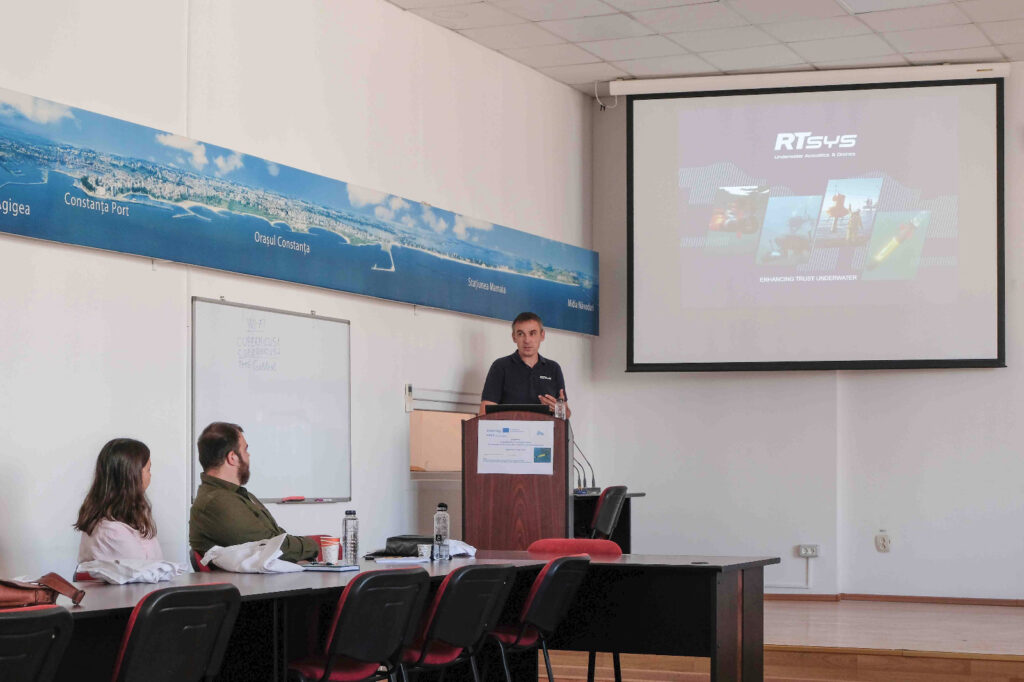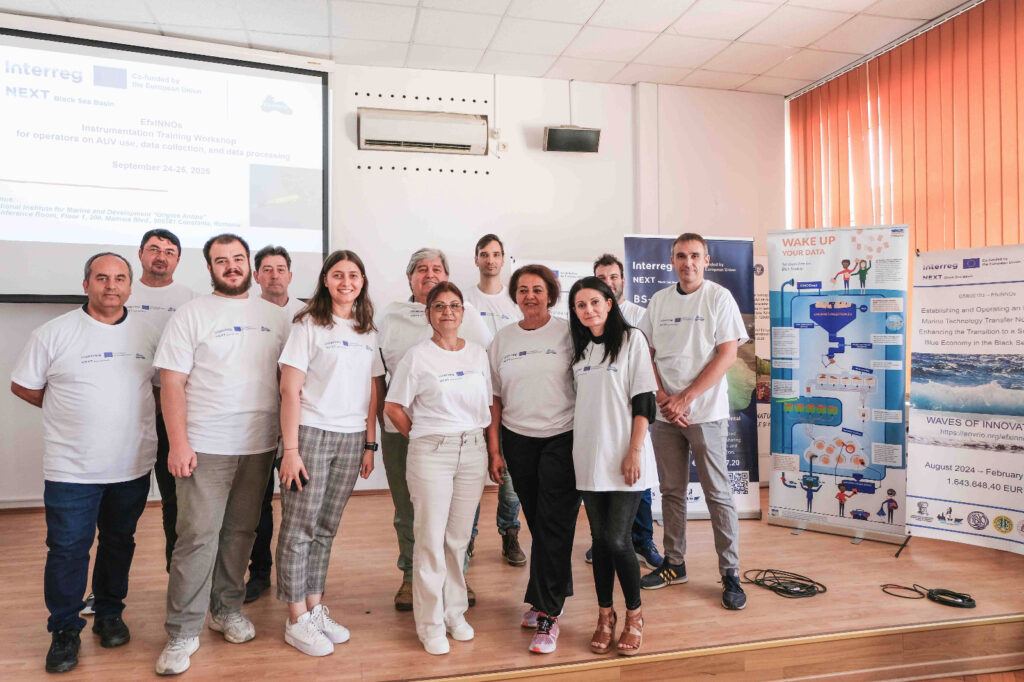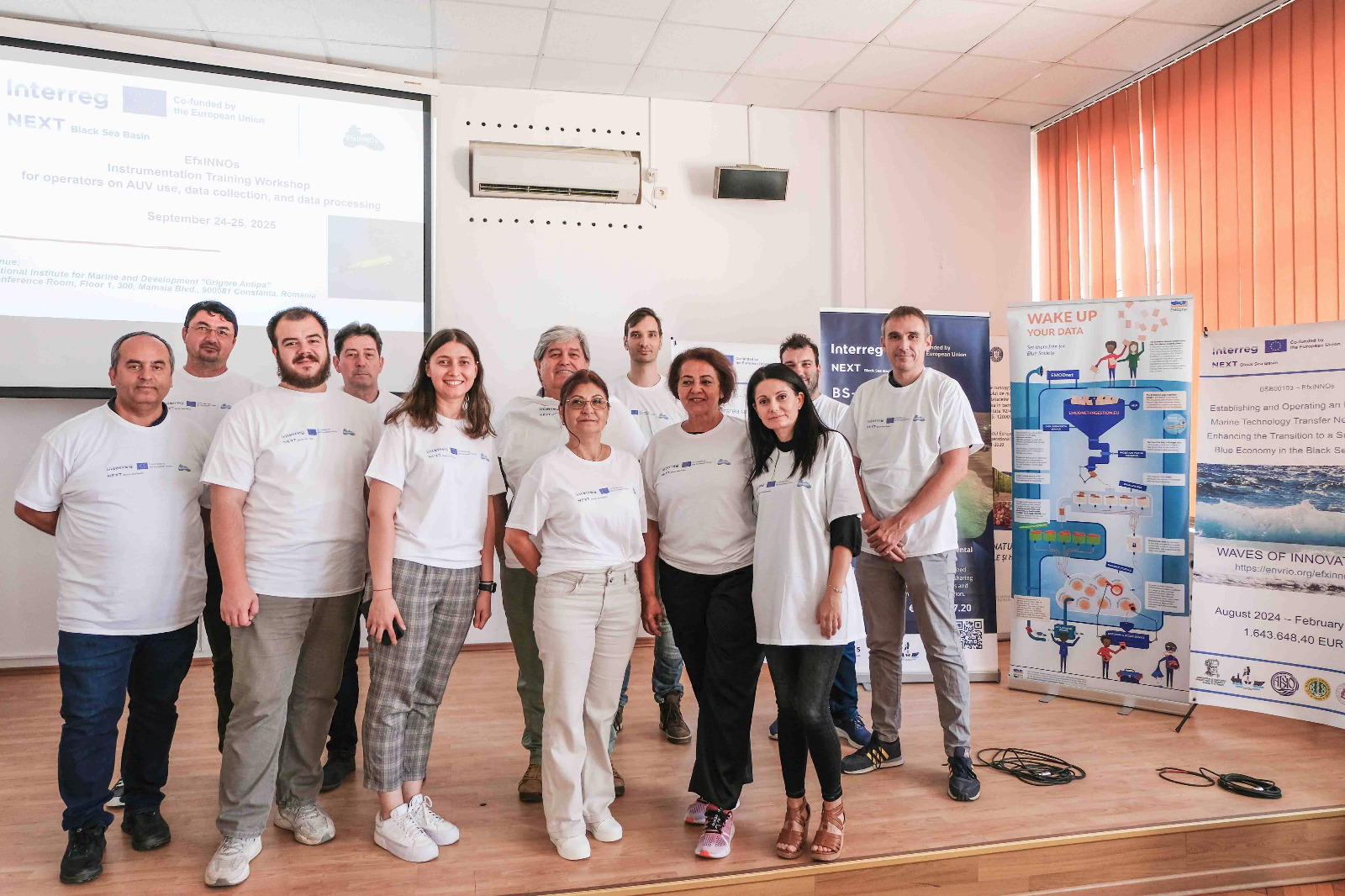
Constanța, Romania – From September 24–25, 2025, the headquarter of the National Institute for Marine Research and Development “Grigore Antipa” (NIMRD) became a hub of marine innovation as experts, operators, and researchers gathered for the EfxINNOs Instrumentation Training Workshop. Co-organized with RTSYS (France) and Navtron, this two-day event marked a key step in enhancing Romania’s capacity to deploy and operate Autonomous Underwater Vehicles (AUVs). By blending theory, hands-on demonstrations, and data-processing sessions, the workshop reinforced the EfxINNOs marine monitoring network across the Black Sea.
Workshop Highlights
The Constanța Training Workshop featured presentations from EfxINNOs partners, BS-SEOS project, NIMRD experts, RTSYS, and Navtron, setting the stage for a mix of theory and practice on AUV technology.
Dr. Razvan Mateescu (NIMRD) highlighted the importance of strengthening Romania’s operational capacity in marine monitoring, emphasizing how AUV deployments, sensor integration, and advanced data workflows can enhance both national and regional research infrastructure.
Luminita Buga (NIMRD) presented the BS-SEOS project (under Interreg Next Programme), sharing key insights and lessons learned from previous Black Sea monitoring initiatives, and illustrating how these experiences can inform the effective deployment of AUVs and sensor networks under the EfxINNOs framework.
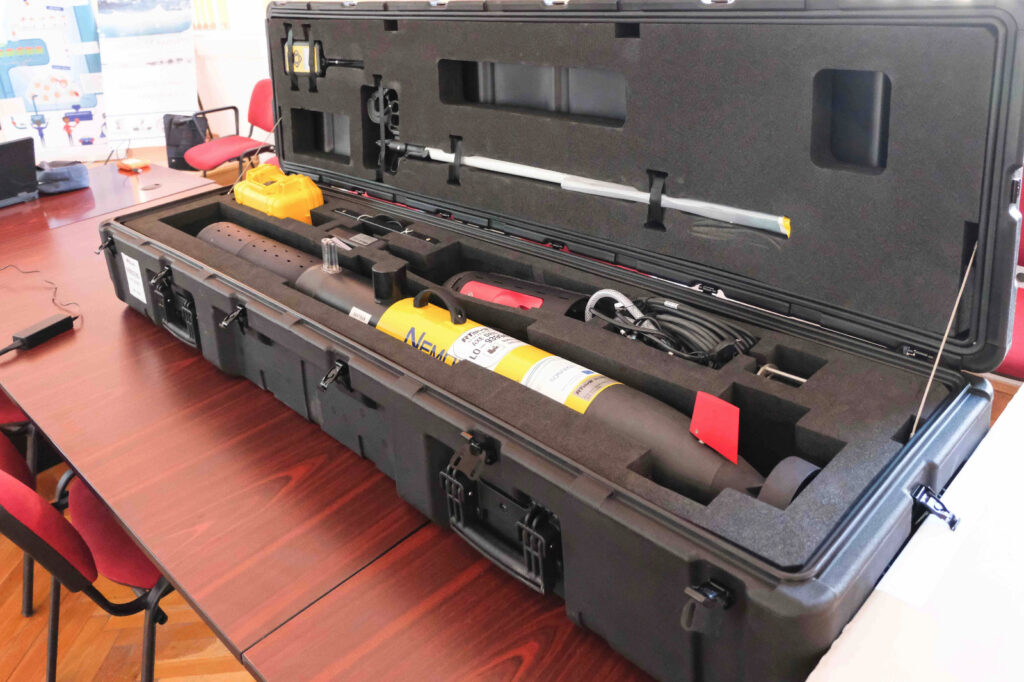
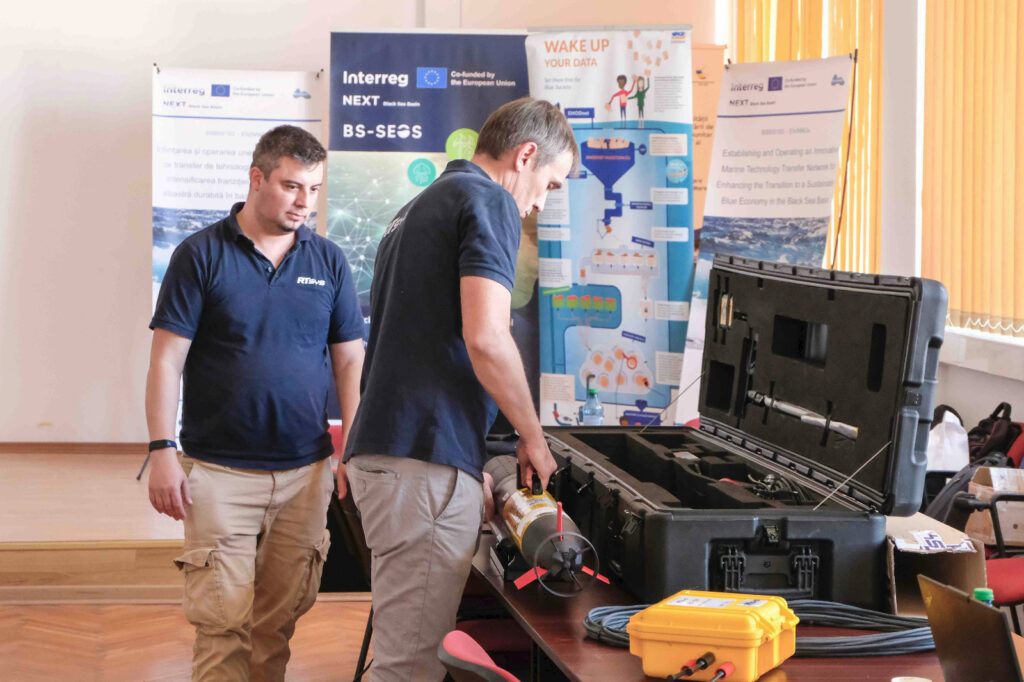
Cyrille Lohier and Bastien Maraval (RTSYS, France) presented the NemoSens micro-AUV, showcasing its compact design, versatile payloads (side-scan sonar, CTD sensors, Doppler log, cameras), and mission capabilities. They guided participants through Cousteau mission software, demonstrating step-by-step how to plan, execute, and replay underwater surveys with real-world case studies.
Eden Kessler (Navtron) showcased the integration of payloads and communication systems, while NIMRD’s operational teams shared their experience in Black Sea monitoring, buoy deployment, and marine ecosystem assessment. Together, they explained how EfxINNOs contributes to cross-border knowledge transfer and innovation in marine technology.
Technical sessions were complemented by interactive discussions, where participants from Romanian universities, research institutes, NGOs, and public authorities exchanged ideas on practical AUV applications for habitat mapping, environmental monitoring, and policy support.
Hands-On Training and Practical Missions
Building on the theoretical modules, participants engaged in hands-on sessions with the NemoSens micro-AUV. Under expert guidance, they learned to:
- Balance AUVs for different payload configurations,
- Carry out maintenance tasks such as O-ring replacements and buoyancy adjustments,
- Program and execute sample missions using Cousteau software,
- Process collected data in SonarWIS and GIS platforms to transform raw sonar and sensor outputs into usable maps and visualizations.
Although rough sea conditions prevented full-scale offshore deployment, participants simulated missions and performed practical tasks in controlled conditions, ensuring valuable operational training and skill development.
Towards a Connected Black Sea Monitoring Network
The Constanța workshop reinforced the role of Romania in advancing the EfxINNOs marine monitoring network. By blending international expertise with local research capacity, the event strengthened collaboration across universities, institutes, and authorities, laying the groundwork for coordinated AUV-based monitoring across the Black Sea Basin.
As EfxINNOs moves forward, these joint training efforts will accelerate the adoption of innovative marine technologies, improve data quality and availability, and support the sustainable management of coastal and marine ecosystems.